


COMMUNITY DROP IN SPACE & RESOURCE HUB
Community Living Room
Community Living Room is as a vibrant community hub for people experiencing homelessness. Now in the same location as our Wellness Clinic, it is a casual environment in which guests experiencing the stress of housing instability are invited indoors, into a community, to enjoy a warm meal, hang out, and choose for themselves whether to engage in services we offer.
This space is primarily run by Community Ambassadors who are hired and trained directly from the community. These are individuals who were or are experiencing homelessness, substance users and now in recovery, former and active sex workers, and immigrants. Community Ambassadors are also native San Francisco and Tenderloin residents who grew up in the neighborhood and now live and work in the area.
- HIV Prevention
- HIV Care
- Sexual Health
- Community and Belonging
- Homeless Services
- Mental and Behavioral Health
- Substance Use Treatment
- Case Management
Need Drug Treatment Now?
Call (888)246-3333 to speak with a medical provider or visit Behavioral Health Access Center at 1380 Howard Street. Services include: Receiving medication the same day for Fentanyl, Heroin, and Opioid treatment.
Monday-Friday 8am-7pm
Saturday-Sunday 9am-4pm
DAILY SCHEDULE
COFFEE - Available in the afternoons 1:00 PM - 4:30 PM
LUNCH - Dine-in lunch is served at 1:30 PM and 3:00 PM for group and workshop participants. 30 people max per group.
Need Community Support? San Francisco Community Health Center offers several support groups for people who use substances.
REACT Project: Learn about substance use, mental and physical health, and harm reduction. This 16-week course offers incentives and meals to participants. Ask for the Community Engagement team in the Community Living Room at 730 Polk, or contact Program Manager Mauricio at (415)914-3684 to learn more and enroll.
UPCOMING EVENTS
CALENDAR PDF
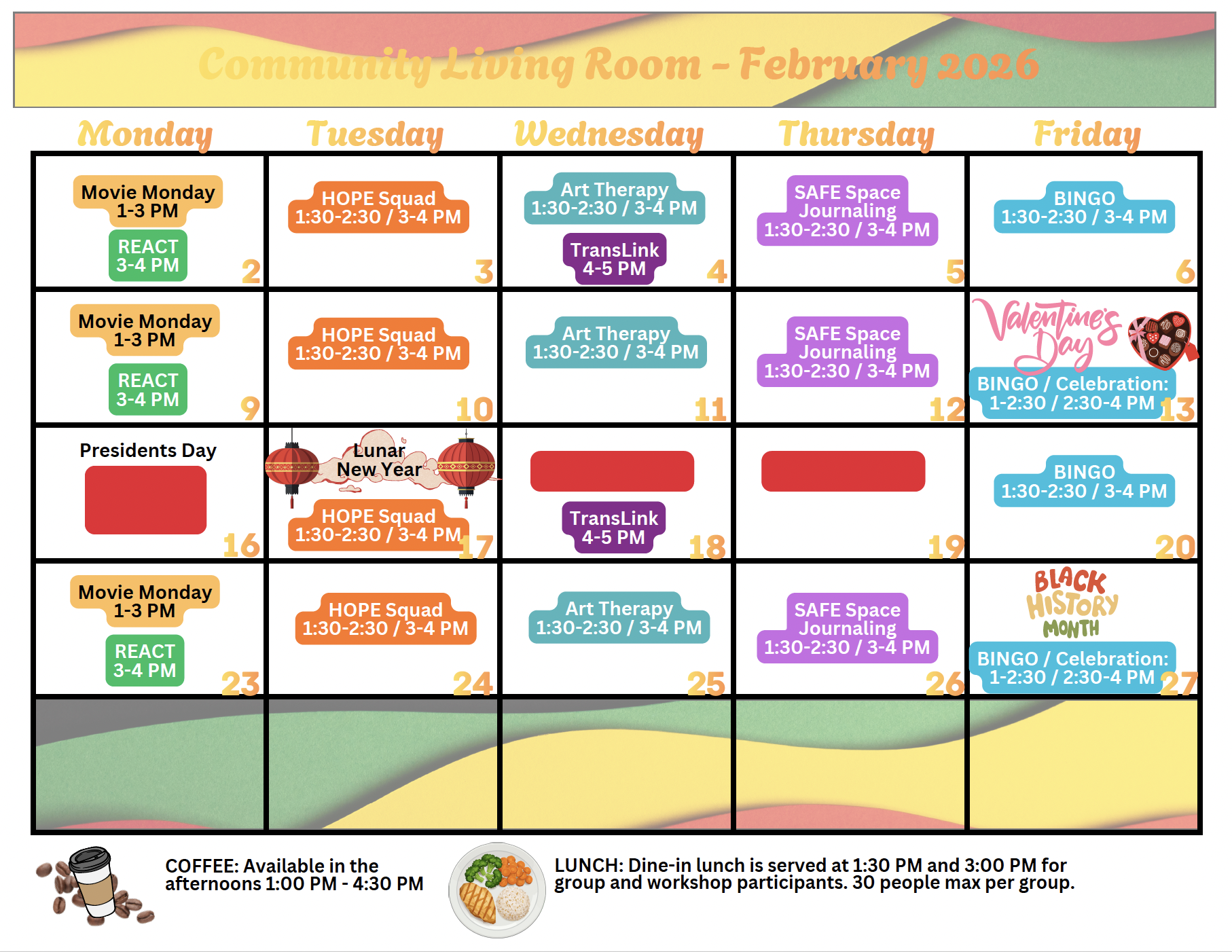
Featured
Community Living Room Programs
Street Outreach
-
Our Street Outreach Program under the community engagement team is dedicated to supporting individuals experiencing homelessness. We connect people to essential medical, dental, and behavioral health services, as well as inform them about available support groups. By meeting people where they are, we offer compassionate care and help them access the resources they need for a healthier future.
-
Volunteer for our Street Outreach team! For other inquiries, contact Alexis Woullard at Alexis@sfcommunityhealth.org or (628) 222-8084
Project REACT
-
Project REACT is a 16 week educational program. Participants learn about Mental Health Physical Health, Harm Reduction and Substance Use through the 16 weeks. During the duration of their program they will have access to our once a week Clinical Support Group, Case Manager, Peer Support Group, and much more. With each step they take within our program they will also gain incentives if criteria are met during the program.
-
Please send inquiries about Project REACT to Mauricio Romero at mauricio@sfcommunityhealth.org and include interested party’s name, DOB, and the best way to contact them!
Sex Worker Advocacy
-
Sex Worker Advocacy is an 18+ discussion and support group that aims for the full decriminalization of consensual adult sex work. This group open to anyone regardless of gender. The group meets every Wednesday at 730 Polk St. 4th Floor, in the small room by the front reception, 2:30 pm - 4 pm. The group facilitates working resources, self-defense, know your rights trainings, safer sex supplies, and more.
-
For more information about Sex Worker Advocacy groups, contact Xander Briere at xander@sfcommunityhealth.org
All events and programs at the Community Living Room
Partnerships
Text on importance of our partnerships and the coordination of homeless services and substance use services in San Francisco
Code Tenderloin
Night Navigation
GLIDE
The Community Living Room is a partnership between SF Community Health, Code Tenderloin, Glide, and SFDPH's Office of Overdose Prevention